

Dear WuBookers, for a holiday home to generate income, the rental price must be right – that is, in line with the costs of running it as well as market standards. A property priced too low risks causing the operator to run at a loss; but a price that is too high can also be counterproductive as it fails to attract guests and bookings. Let’s take a look together at how to set the right price for your holiday home and what factors to consider.
Fixed and variable costs: the starting point
A holiday home incurs expenses; that’s inevitable. It is therefore very important to know your outgoings in order to set a base rate that covers them without making a loss. Expenses are usually divided into fixed and variable costs.
Fixed costs may include, for example: rent (if the property is not owned) or a mortgage, property taxes and other local authority charges (such as waste collection), and any insurance against damage and other unforeseen events. The common feature of fixed costs is that they remain constant over time and do not depend on whether guests are staying at the property. For this reason, they are also easier to account for and classify under ‘expenses’.
Variable costs, on the other hand, are those linked to the occupancy of the holiday home, such as cleaning costs (which are absent or lower when the property is unoccupied), bills and utilities,commissions paid to OTAs and other booking portals, and any maintenance costs.
To set your rates, you must therefore take into account all fixed and variable operating costs (as a monthly average), so as to have a fairly accurate picture of your regular outgoings and the amount needed to cover them.
Factors affecting the price of your holiday home
Now that we know how to set a sustainable minimum rate, let’s look at the factors that can affect the price of your holiday home.
Location
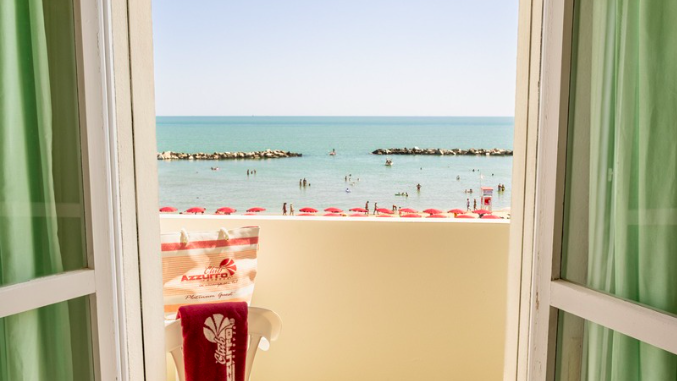
Location is the first of these. A holiday home in a historic centre, by the sea, overlooking a lake or in particularly prestigious mountain areas costs more than a similar property that does not offer these advantages. As well as the view and proximity to the area’s main attractions, the surrounding area and accessibility are also important. Is it an isolated area with few shops, or a well-served, lively area with restaurants, shops and other leisure and entertainment options? The surroundings and transport links all play a part in the price you can charge.
Property features and amenities
The type of property and its facilities also influence the rental rate. The number of bathrooms and bedrooms (and their layout), the presence of balconies and outdoor areas, or premium amenities such as a swimming pool and hot tub, are all factors that drive up the price of the holiday home.
Not to be forgotten, of course, is the technological equipment: from fast internet connection to high-quality appliances, right through to smart home solutions, these are all features of interest to guests and therefore justify certain rates.

Reputation and reviews
Reviews are a key factor in a property’s reputation, whether it’s a hotel, a B&B or a holiday home. Travellers are increasingly relying on the opinions of those who have stayed there before, and positive reviews help to convey greater reliability and increase the perceived value of the experience. A property with a higher rating can therefore charge higher prices for the same services compared to less popular alternatives.
Local market and competition
Speaking of competitors, before setting your rates, it is essential to analyse the competition. This gives you an idea of how much tourists are willing to spend on average for a night in a similar property in the area and avoids the risk of overpricing or underpricing your own accommodation. The simplest way to carry out this research, if you do not have an automated analysis system, is to search for similar holiday homes on online platforms, noting down and comparing the various prices.
Seasonality and fluctuations in demand
Finally, it is also important to consider seasonality and possible fluctuations in demand. A holiday home located in a city of art will likely enjoy a steady flow of guests and may therefore decide to charge fixed rates throughout the year. A seaside property, on the other hand, will experience the typical fluctuations of the holiday season, with demand rising in summer and falling in winter. As well as depending on the time of year, demand can also change in response to one-off events such as concerts, trade fairs, festivals and other mass gatherings that can suddenly boost interest in the property. All these factors affect rates which, rather than remaining static and unchanged forever, can vary dynamically depending on the time of year and market opportunities.

How to manage dynamic pricing for your holiday home
Simply setting a price is not enough; you need to adjust it periodically according to seasonal and strategic criteria, such as offers, discounts and other restrictions that affect the rate. But how can you manage all these changes without risking making a mistake? There are various products on the market specifically designed for this purpose: RMS (Revenue Management Systems), which are designed precisely to reduce manual processes related to rates and maximise profits. However, for those seeking less specialised and more versatile solutions, a valid alternative is a good PMS (Property Management System), such as Zak by WuBook. As well as ensuring that all the property’s operations run smoothly, it also includes yield management features to optimise rates and their management.
Zak by WuBook for optimal rate management
Dynamic pricing is a well-known and widespread practice, but for those who have recently started their business or manage multiple properties, it can seem complicated or daunting. Zak by WuBook is designed precisely for this: to simplify the complexities associated with rate management. How? With a module dedicated to setting prices and their automatic adjustment.
All the host needs to do is define the rules that determine the changes, and the PMS takes care of updating the rates across all channels.
For example, with Zak you can apply:
- different prices for specific periods;
- seasonal rate changes;
- minimum and maximum prices for each property;
- stay restrictions;
- surcharges;
- discounts;
- promotions.
In other words, this allows you to define customized pricing criteria that increase or decrease selling prices during specific time periods or under certain conditions.
The rules can also be tailored to individual properties or groups of properties, by accommodation type and by pricing plan. So, for example, if a property manager oversees several different properties, they can devise a sales strategy and dynamic pricing for each one, quickly and easily, all from the same control panel. This is a significant convenience amidst the vast array of tasks required to run the property.
How to increase the price of your holiday home
We’ve seen how to set a minimum rate, what factors to consider when setting the right price, and which tools are useful for managing strategic price changes. But if we wanted to boost the holiday home’s earning potential, what should we focus on?
Here too, there are many solutions, all of which are compatible with one another.
Offer more services and amenities
Fitting out the holiday home with high-end furnishings and accessories, such as designer furniture or state-of-the-art appliances, can be a good way to offer the accommodation at higher prices. Adding exclusive services, such as a concierge, private chef or bespoke tours, also helps to boost profits. These can either be included in the initial package or added later through targeted upselling and cross-selling.
Focus on efficiency and value
To ensure the guest experience matches the price you intend to charge, everything must be in perfect working order and run efficiently, including the booking and check-in process. Quick check-in and check-out systems, for example, allow travellers to be self-sufficient and access the property stress-free.
Alongside substance, pay attention to presentation too. How a property is presented – through words, images and videos – is crucial in conveying its value and, consequently, in making guests more willing to spend more to stay there.
Manage availability wisely
Nobody wants to miss out on business opportunities, but sometimes excessive availability risks backfiring. A property that is always available, at any time of year and without any particular restrictions, does not necessarily sell well. The risk, in such cases, is that it will appear under-utilised and unpopular, less attractive than other, more sought-after options. This is why it is important to manage your rates and booking conditions effectively, without sending the wrong message.
3 mistakes to avoid after setting your rates
Setting the price of your holiday home is just the first step; then come the day-to-day running, management and marketing techniques… all of which are important and useful, but be careful not to make unintentional mistakes that could prove costly for your business:
- making sudden and inconsistent changes: dynamic pricing is crucial, and it is equally essential that it is tailored to the property’s sustainability. From one year to the next, rates may change for many reasons: a higher cost of living, a different market positioning for the property, etc. However, it is important that price changes are made in full knowledge of the facts and always with due regard for customers: both loyal customers, who are accustomed to a certain standard of service; and new customers, who might misinterpret very large price fluctuations;
- failing to monitor your own performance: all theoretical assessments are valid until they are put to the test. This means you must always keep a close eye on the property’s actual financial performance to identify any weaknesses or areas for improvement, rather than relying solely on intuition;
- ignoring competitors is another common mistake. Simply mapping their pricing once is not enough: you need to monitor them over time to see how they are performing and whether there are any significant changes that indicate wider trends in the sector, as well as opportunities to be seized.
In short, managing a holiday home is, to all intents and purposes, a business and, as such, requires attention, experience and the right tools.
- different prices for specific periods;
- seasonal rate changes or changes based on availability;
- minimum and maximum prices for each property;
- stay restrictions;
- surcharges;
- discounts;
- promotions.